Brief in. Brand system to build on.
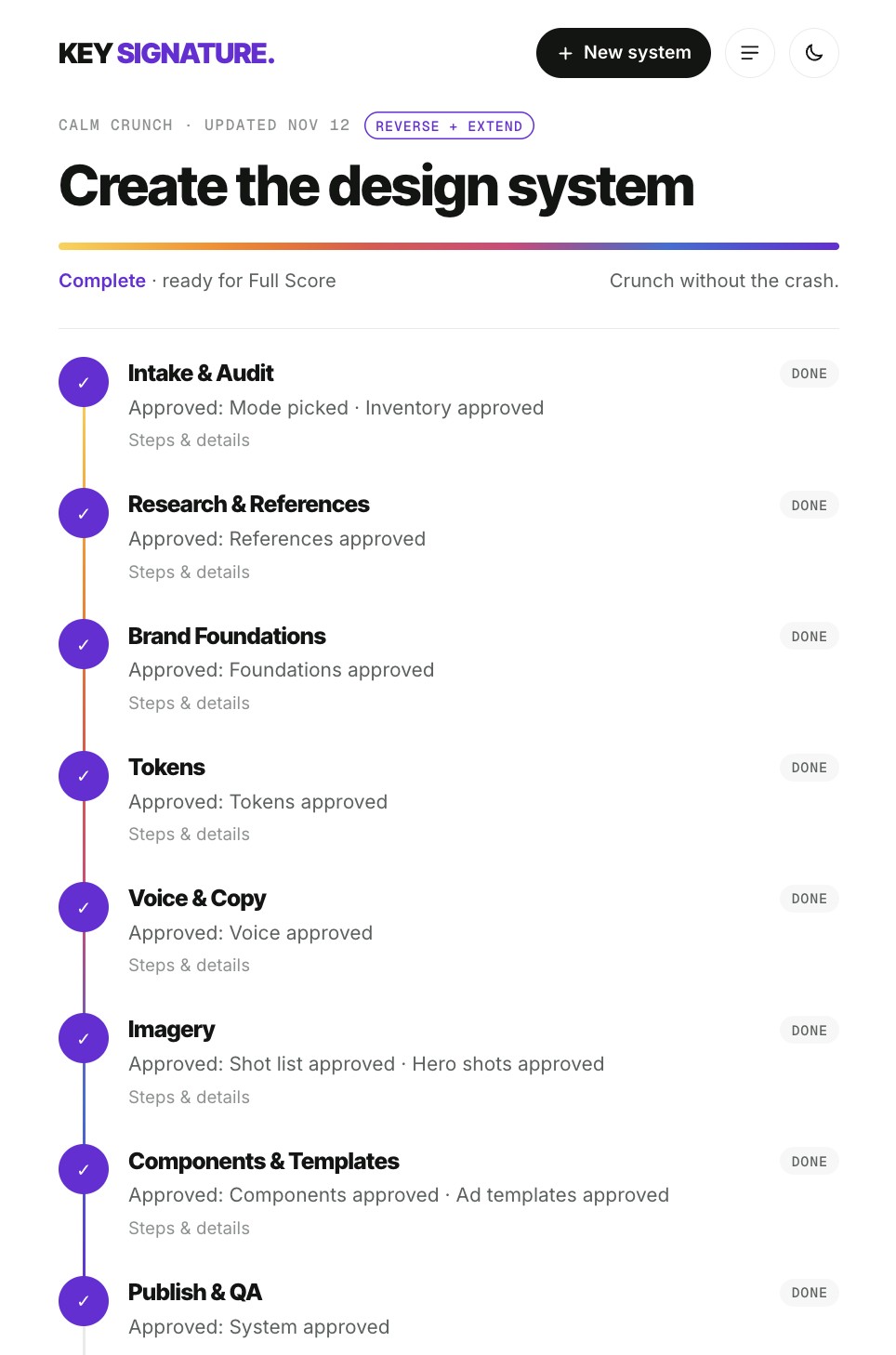
Eight agents that guide you through building a brand’s design system, or decode one from work that’s already approved. It sits as a panel beside the chat, tracks each agent’s progress, and waits for approval before the next one starts. The system lands in Figma, where designers refine it, and feeds my AI marketing team so campaigns start on brand. I keep tuning the agents with every brand.
A guide, not a generator.
Building a design system is a string of decisions. Key Signature puts them in order and keeps a person on each one.
Create or reverse-engineer
Start from a brief or a creative direction, or from work that’s already approved, like bags, ads, decks or a site. Reverse mode finds the rules hiding in it and fills the gaps without drifting from what was signed off.
One agent at a time
The panel shows where you are, what each agent made, and the steps and details behind it. Everyone sees the same progress.
Your approval moves it forward
Each agent ends on an approval: inventory, references, foundations, tokens, voice, hero shots, components, then the whole system.
Eight agents, tracked beside the chat.
Each agent shows what it made, the steps behind it, and the approval that moved it forward: intake and audit, research, foundations, tokens, voice and copy, imagery, components, then publish and QA.
When the last sign-off lands, the system is ready for my AI marketing team.
A brand is a set of decisions. This writes them down.
Most brands live in a few approved files and people’s heads. This turns them into rules that AI and people can both follow.
It can work backwards.
Give it approved bags, ads or a site, and it finds the rules hiding in them: the colors, the type, the voice, what the photos always do.
It tests itself.
Before anything becomes a rule, it makes new work from the system alone and checks it side by side with what’s approved.
It feeds the marketing team.
My AI marketing team builds from the system, so campaigns start on brand from the first draft.
The Calm Crunch design system.
Reverse-engineered from the approved bags and ads, then extended into a full system in Figma: seven pages, ready for my AI marketing team.
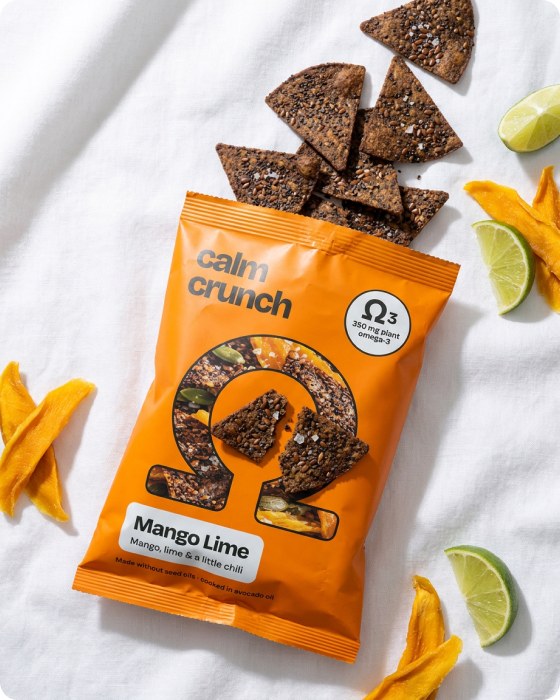
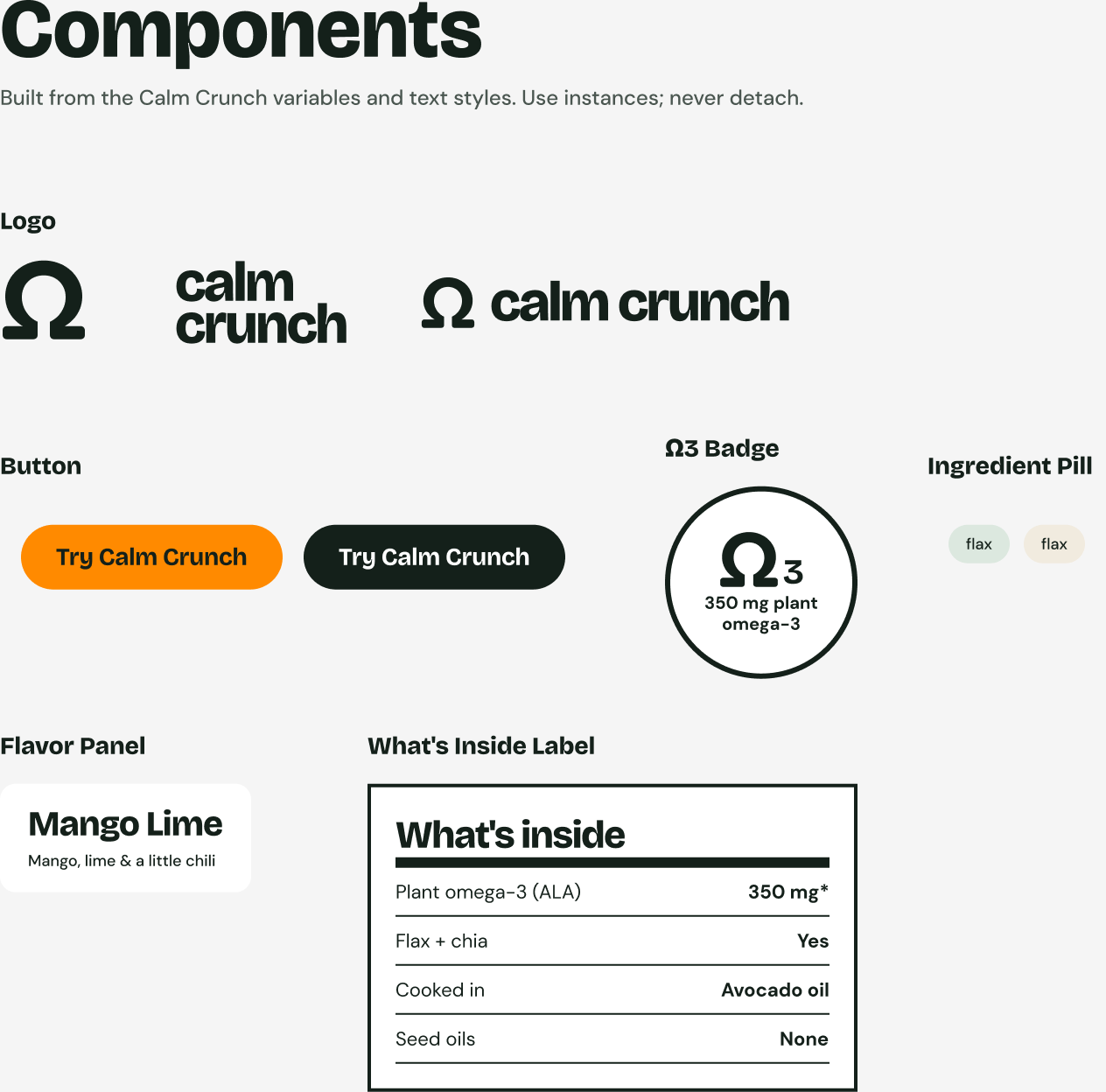
- Plant omega-3 (ALA)
- 350 mg*
- Flax + chia
- Yes
- Cooked in
- Avocado oil
omega-3
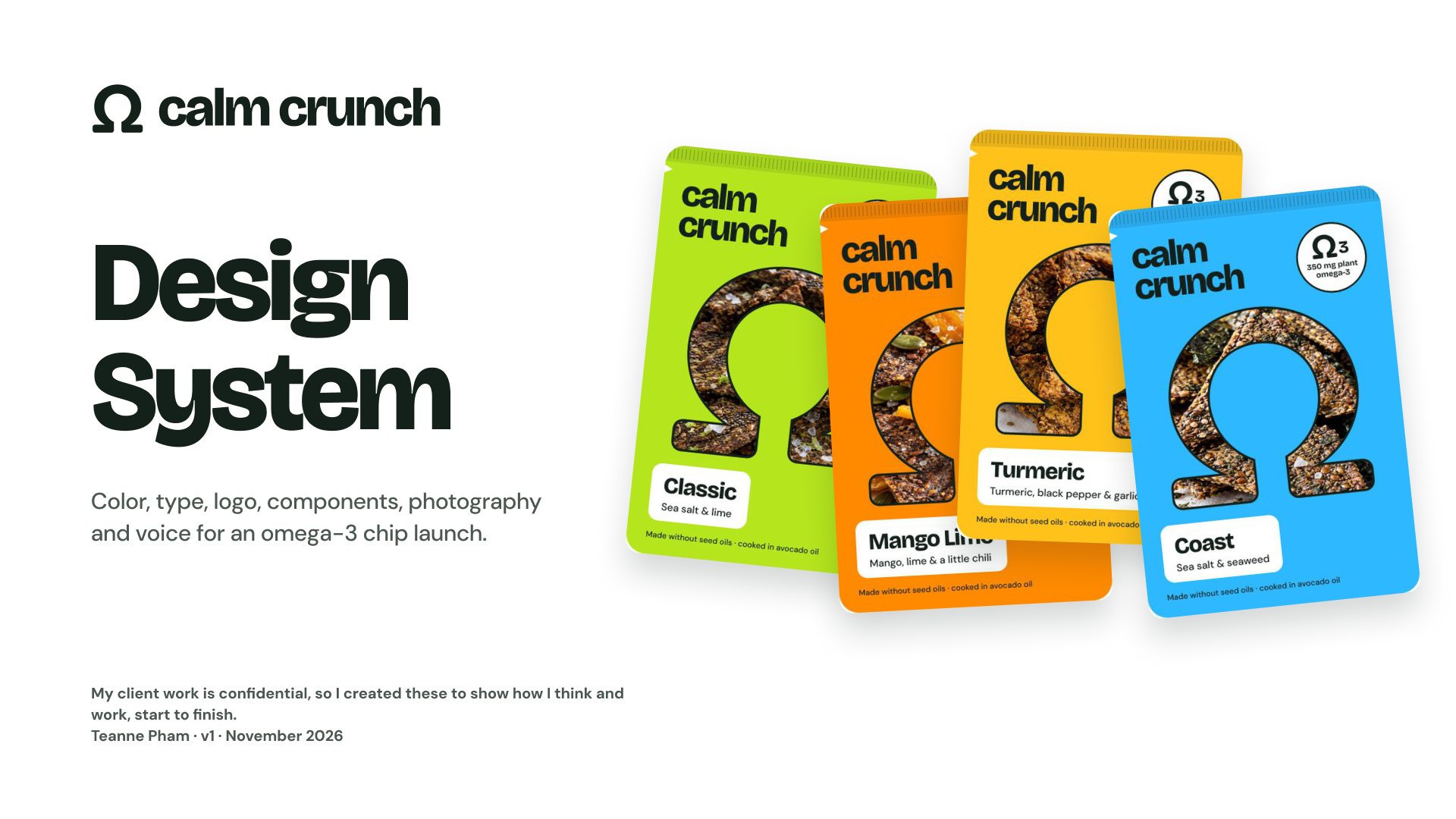
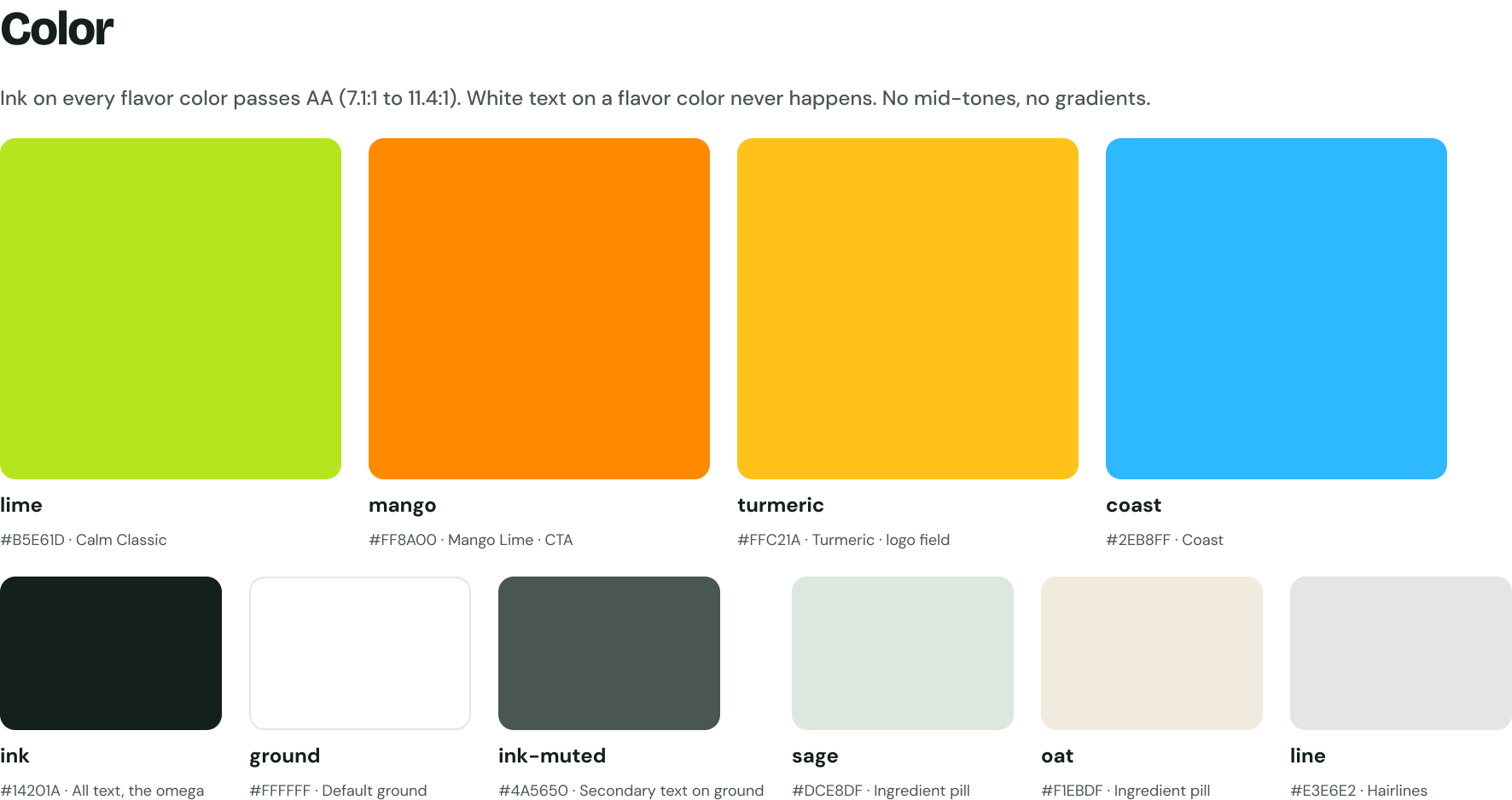
One ground, one ink, four flavors.
Each flavor owns one bright field. Ink on every flavor color passes AA (7.1:1 to 11.4:1). White text on a flavor color never happens. No mid-tones, no gradients.
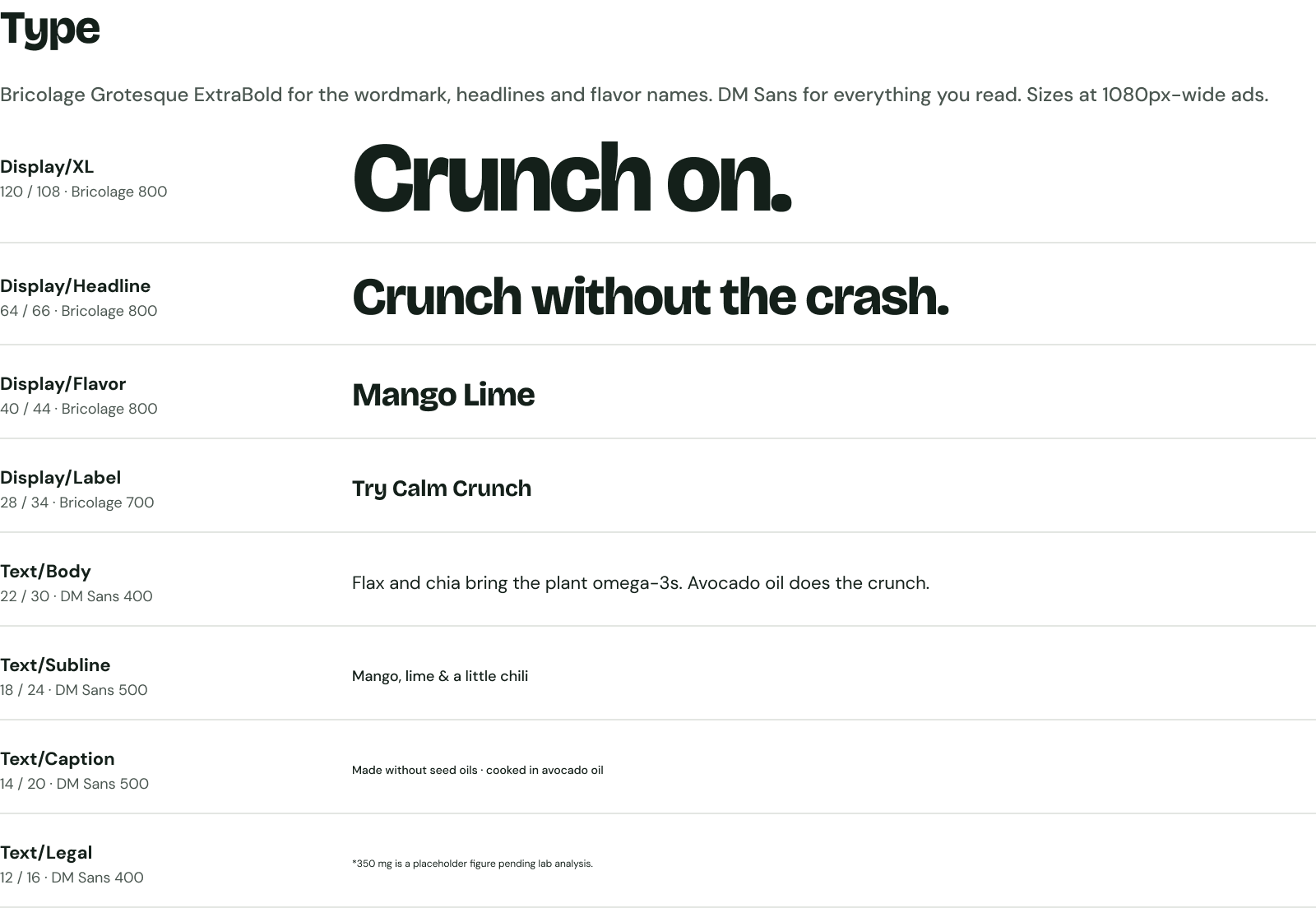
Bricolage for the voice. DM Sans for reading.
Bricolage Grotesque ExtraBold for the wordmark, headlines and flavor names. DM Sans for everything you read. Sizes set for 1080px-wide ads.
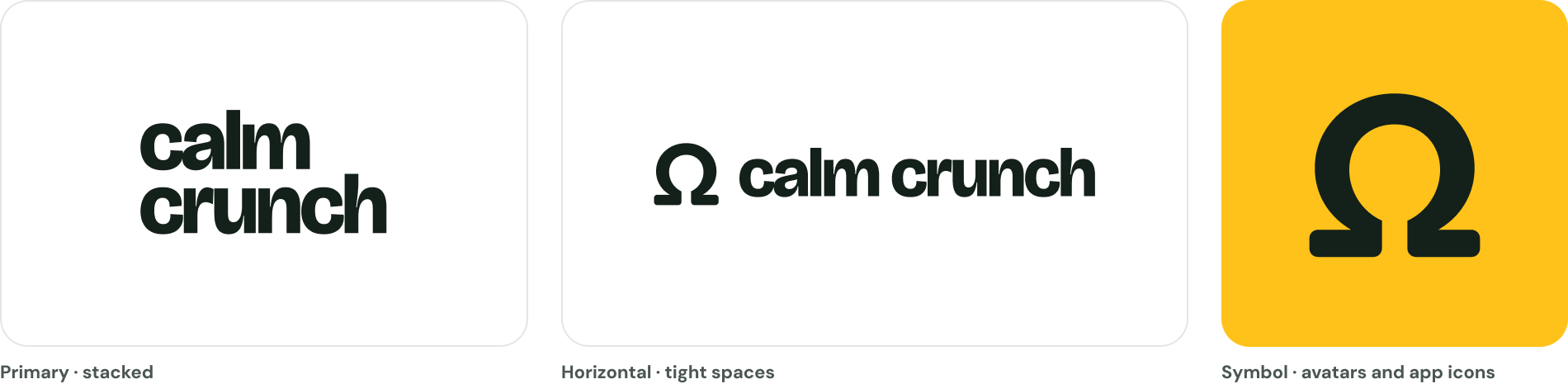
The omega is the brand.
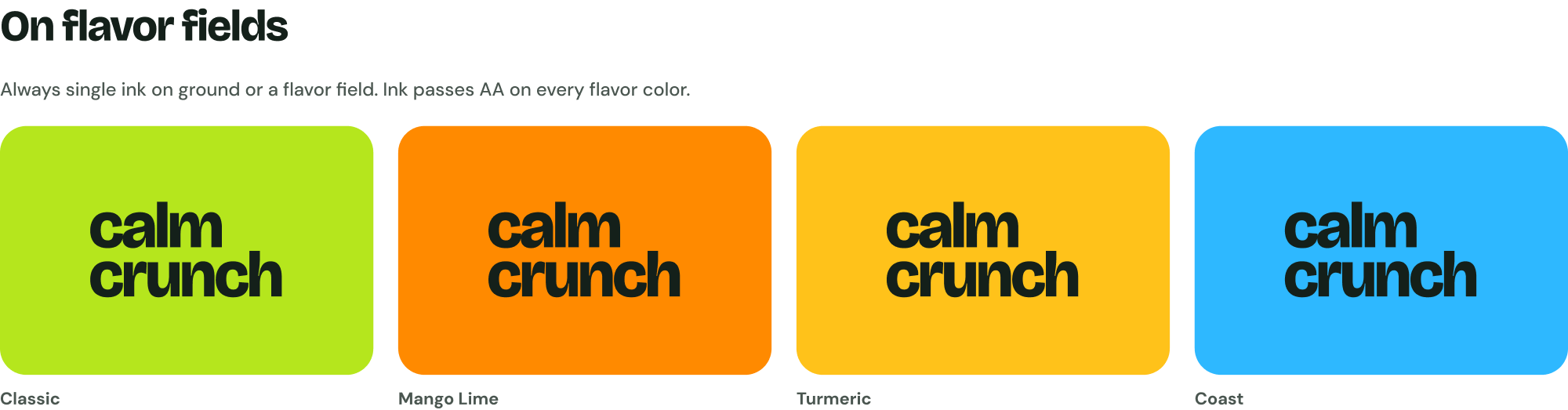
It’s the logo, the window on the bag and the frame in every ad. It holds at 16px, and always sits in single ink on the ground or a flavor field.
Built from variables, used as instances.
The button, the Ω3 badge, ingredient pills, the flavor panel and the “What’s inside” label, all built from the Calm Crunch variables and text styles.
The food is polished. The people are real.
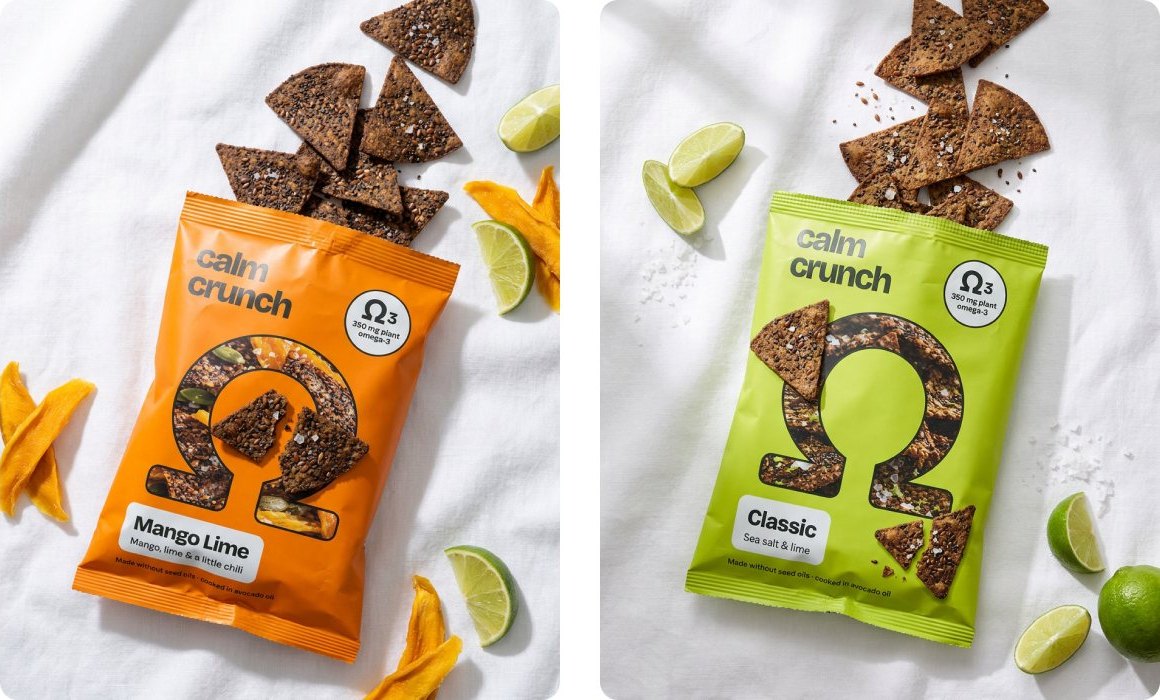
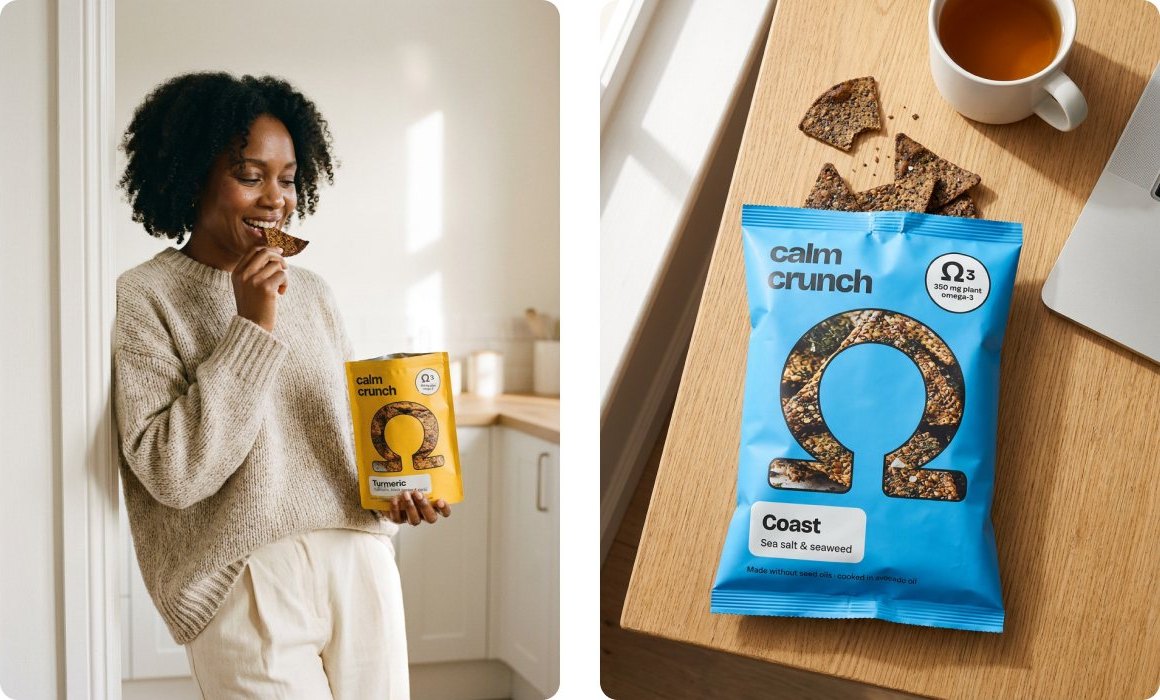
Every product shot is generated from the real bag render, so the model never invents a bag.
- The bag lies flat and full, label exact. Never a bowl or a plate.
- Dark, triangular, seeded chips, lit from the side or behind.
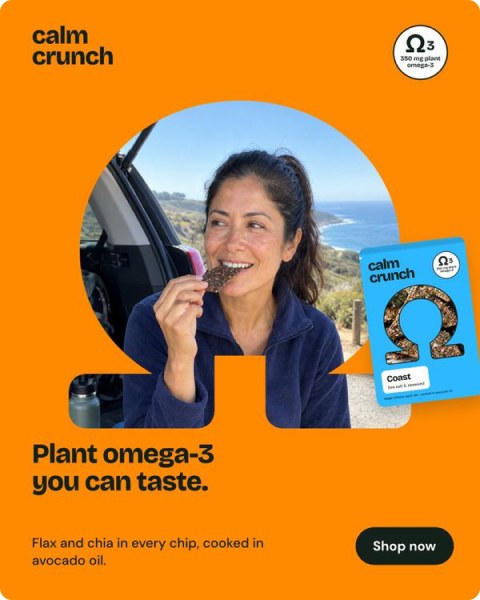
- Real-looking women 37–47, natural skin, caught mid-moment in relaxed or fitness wear.
Talk to the Label Reader.
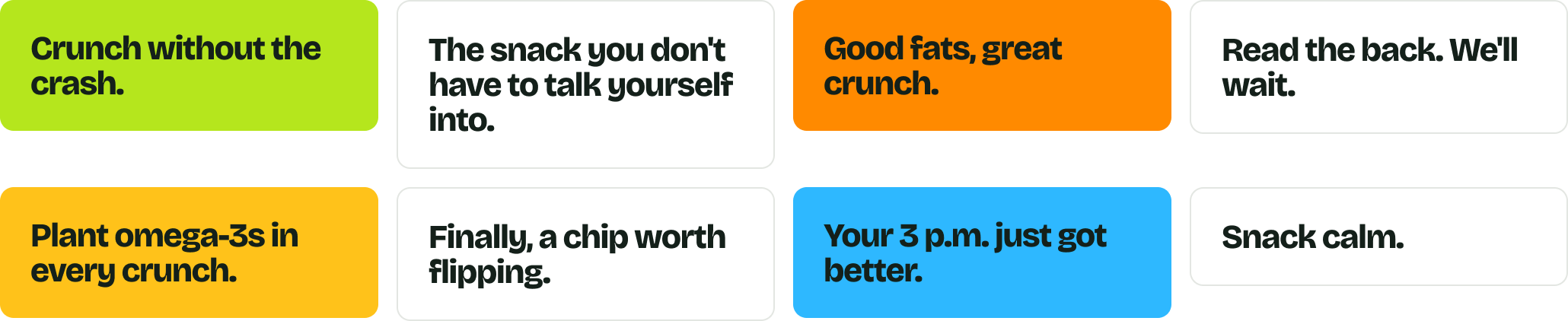
Like a smart friend who happens to know a lot about food. Headlines of 3 to 7 words, one benefit each. Content claims only.

One headline, one proof, one CTA.
The omega frames the benefit before a word does, from a 4:5 feed ad to a shop listing.
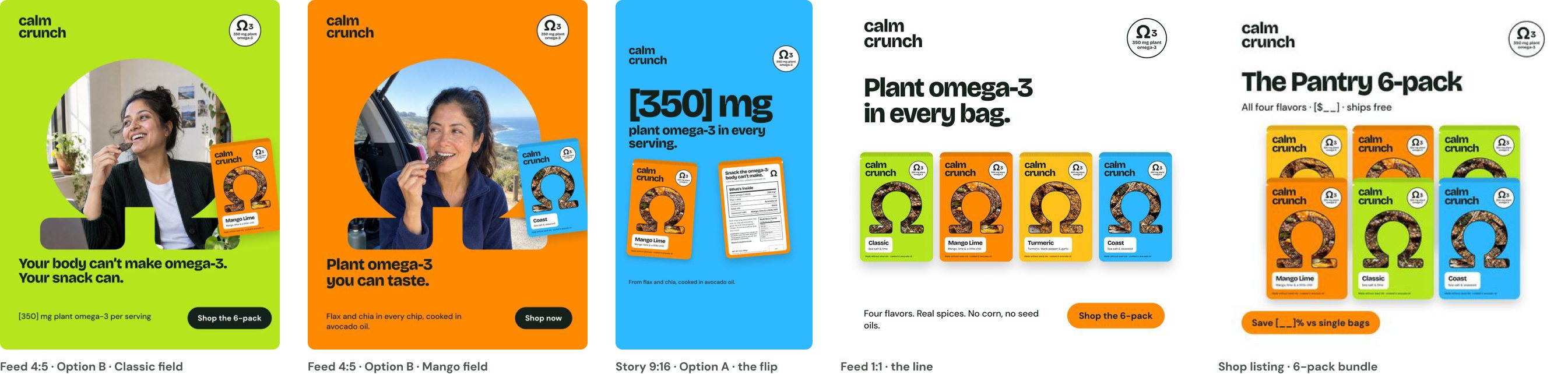
feat., in progress.
A creator brand: white page, black type and a fur character that gives it its face.
Let’s
talk.
I’d love to hear what you’re building. LinkedIn is the best way to reach me.
Message me on LinkedInSee the AI marketing team →I built Key Signature, my AI brand builder, on my own, outside client work. My client work is confidential, so I created this to show how I think and approach problems.