One sentence in. A brand to build on.
I gave my AI marketing team a one-line idea for a creator app: no name, no brand, no users. Eight agents took a first pass at each marketing role, and I made the calls. In under a day it became feat., with a brand, a strategy and a test campaign to react to and refine.
“A new company wants to connect micro influencers, 1,000+ followers on TikTok or Instagram, for free self-serve cross-marketing. The goal is sign-ups. Later, the business wants to build AI tools for creators.”
A gap nobody owns.
Almost every creator platform connects creators to brands. Creator-to-creator growth still runs on cold DMs and group chats.
of Instagram creators have under 50K followers. HypeAuditor via eMarketer
average engagement for 1K–10K creators, against 0.33% for accounts over 1M. HypeAuditor via eMarketer
of creators worry their content will train AI without permission. Epidemic Sound via Net Influencer
One feat. at a time: grow your audience, build your media kit.
The agents did the work. These four decisions were mine.
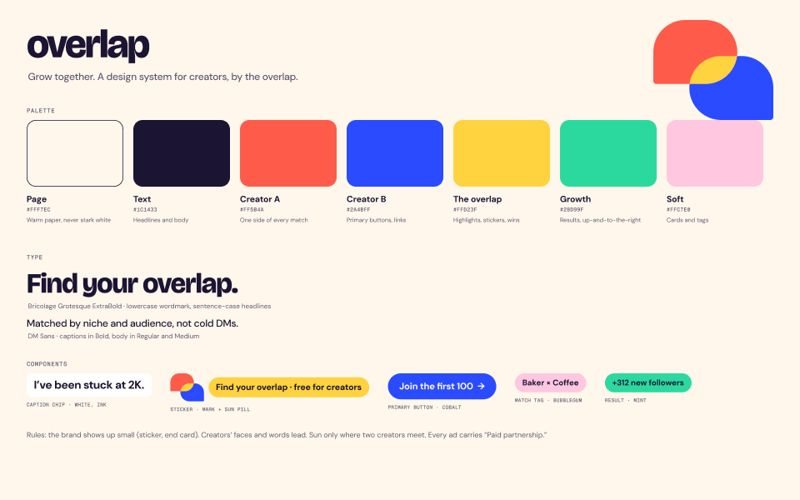
Rename it: Overlap to feat.
The working name described the mechanism, not the feeling, and it pulled the design toward Venn circles. “feat.” borrows how music credits a collab, the way artists have always grown each other’s audiences.
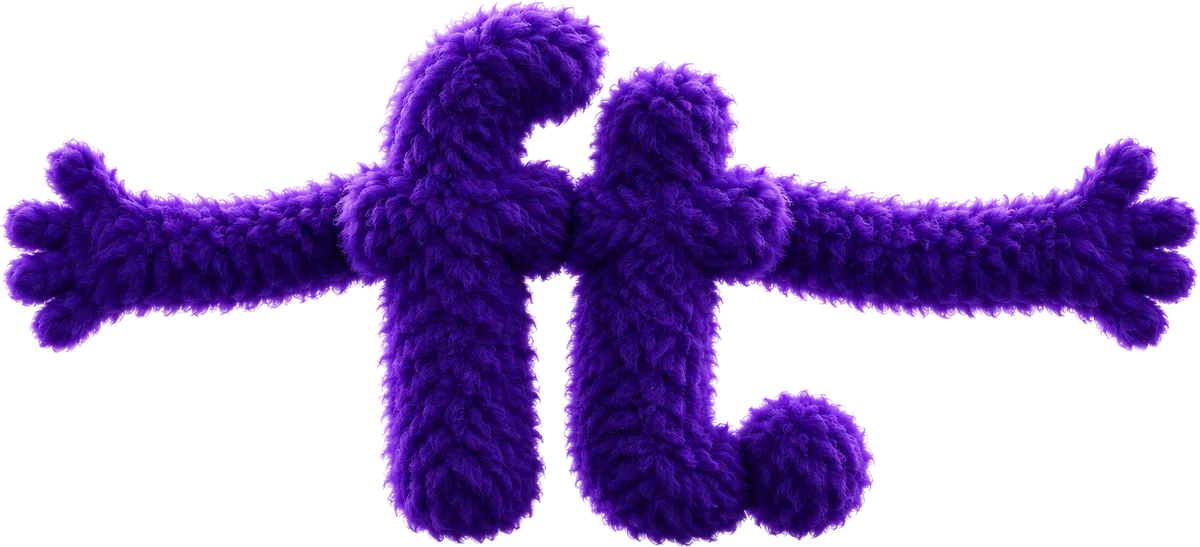
Keep pushing until it’s ownable.
Round one sat too close to a famous payments logo. Round two used the speech bubbles every chat app uses. The third round found what no one else in the category has: a fuzzy “ft.” character that holds two creators together.
Make trust a selling point.
Answer creators’ data questions up front, in plain language.
Put real creators first.
Creator talking heads instead of brand-made ads, with the message built around what small creators get: a bigger audience and a media kit that proves it.
Competent wasn’t enough.
The first two rounds were competent and forgettable. Each critique named what was generic, and the next round fixed it.
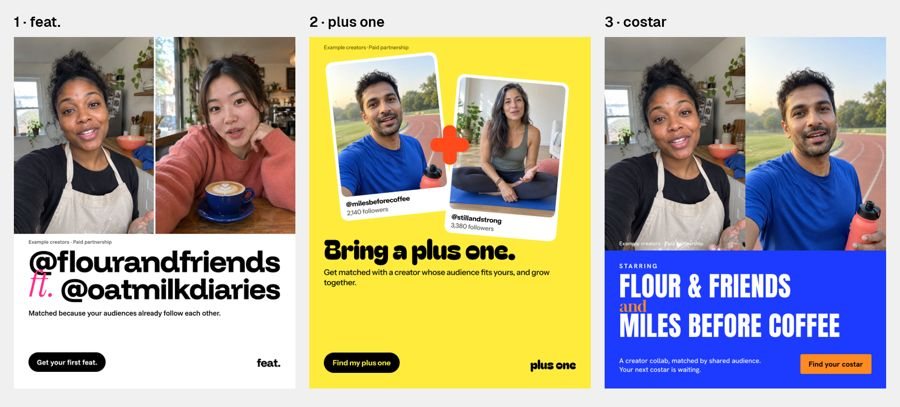
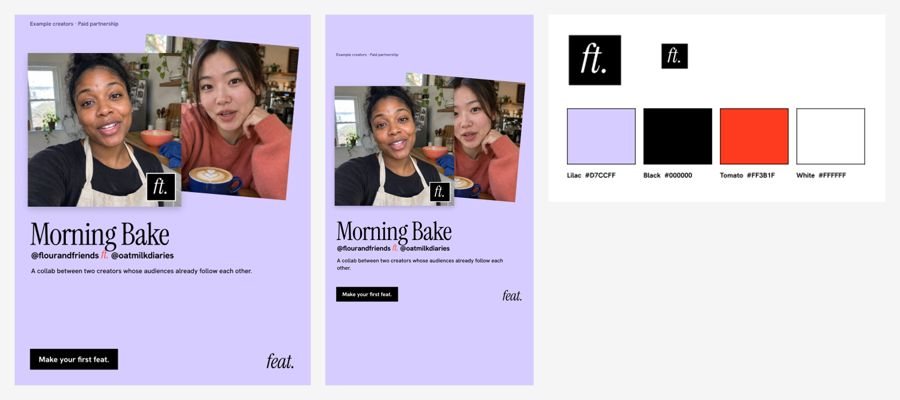
From a billboard to a 728×90 banner.
Creators lead wherever there’s a person on screen, and the brand signs off.
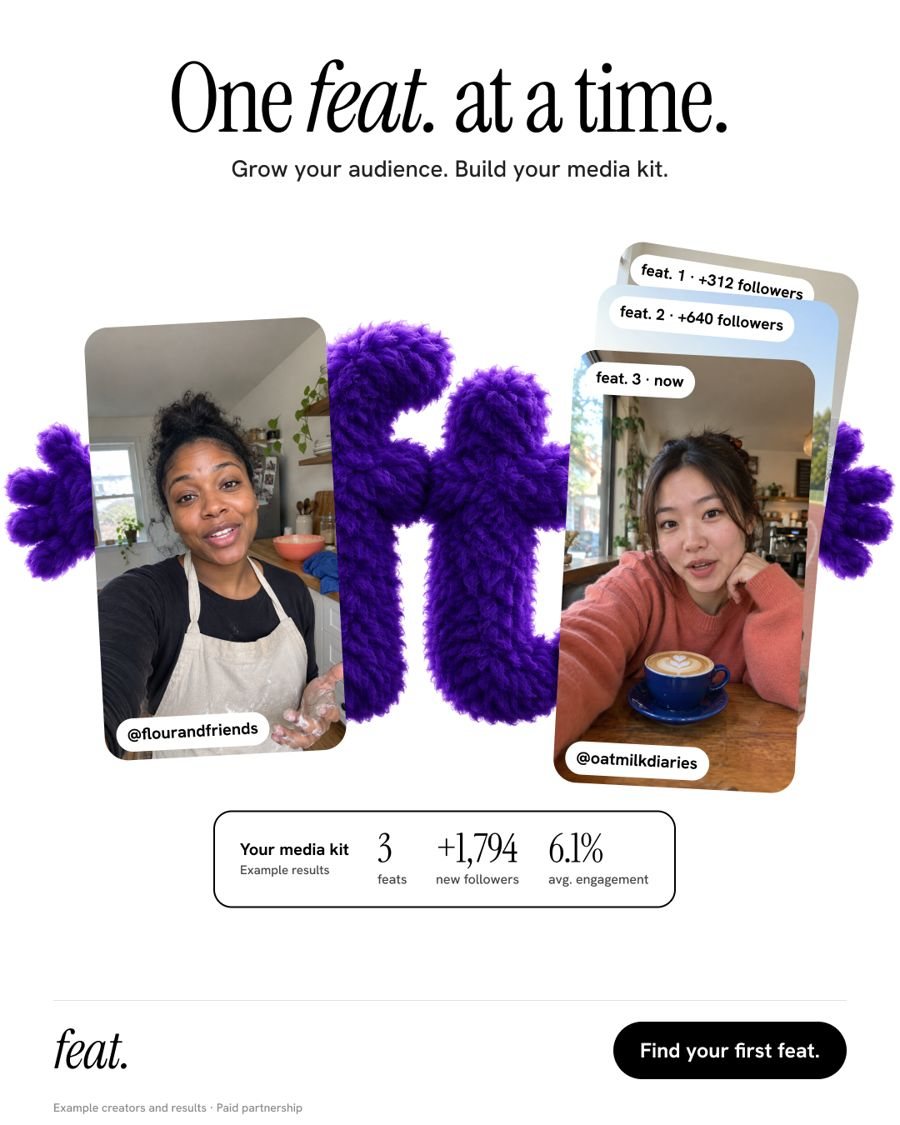
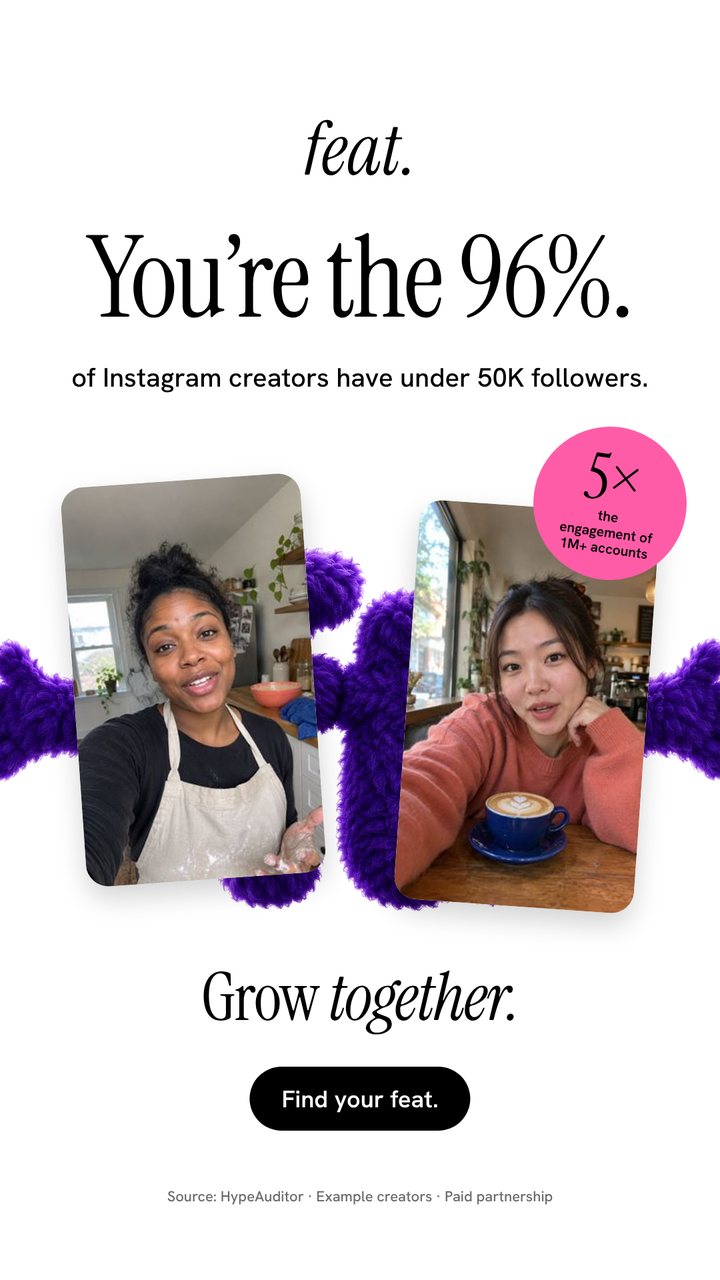
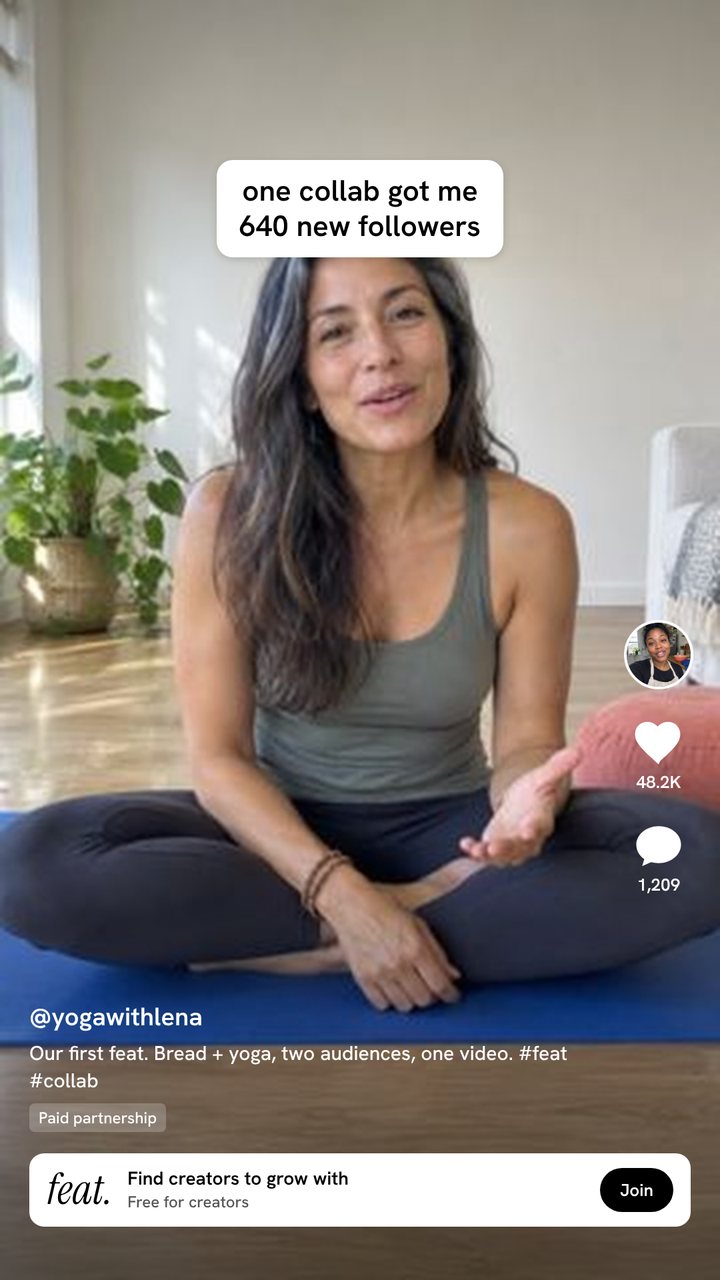
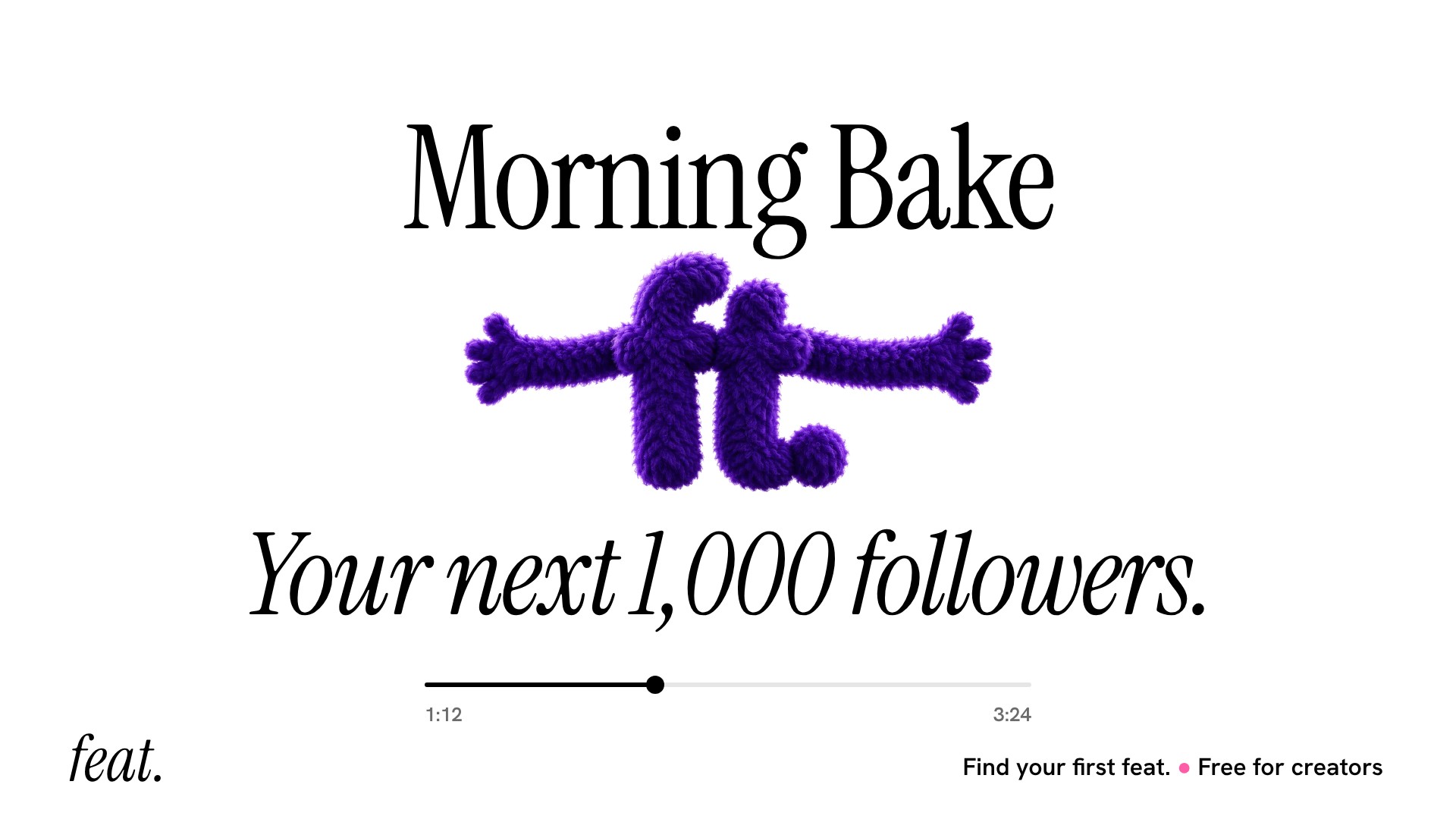
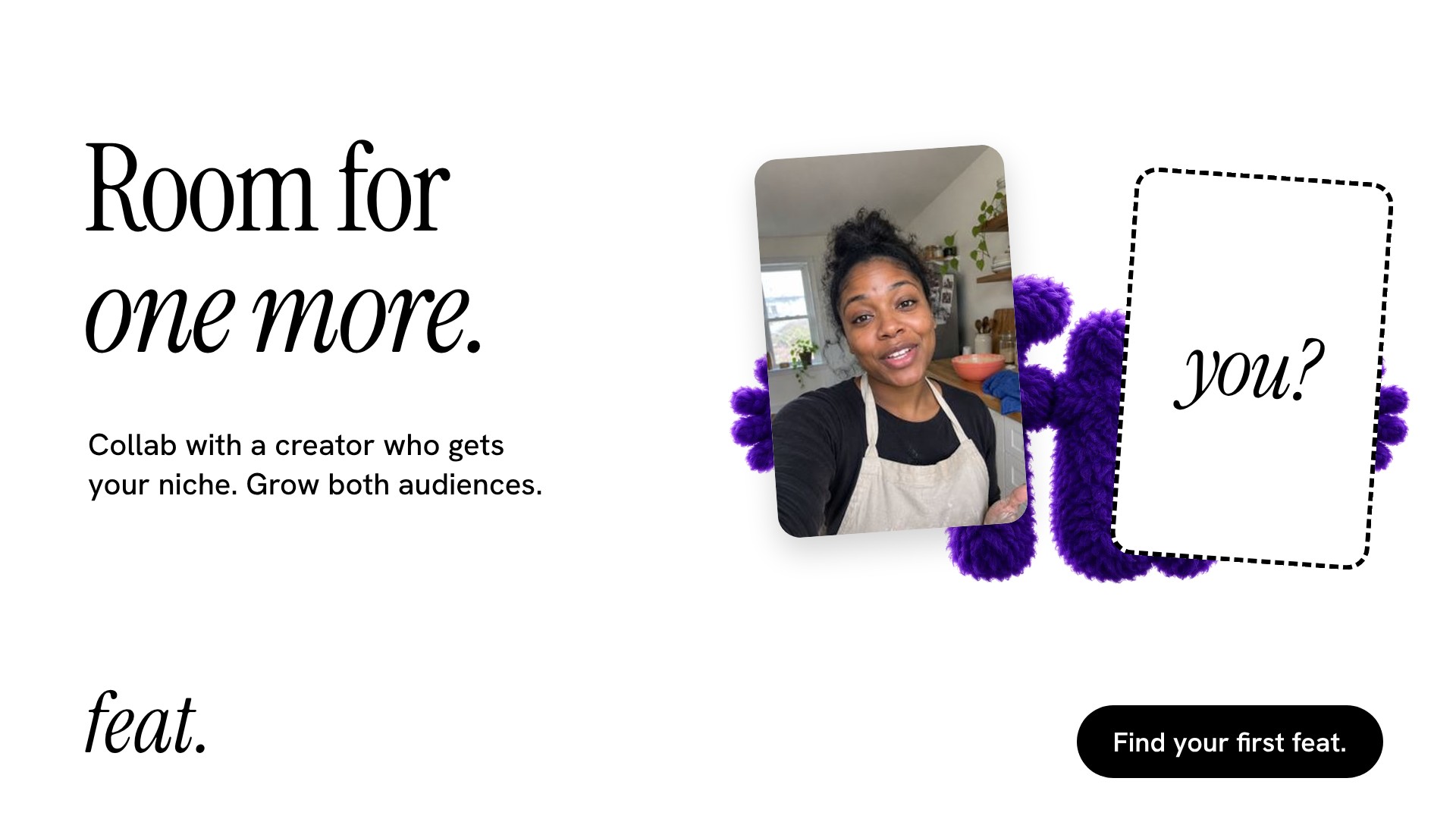

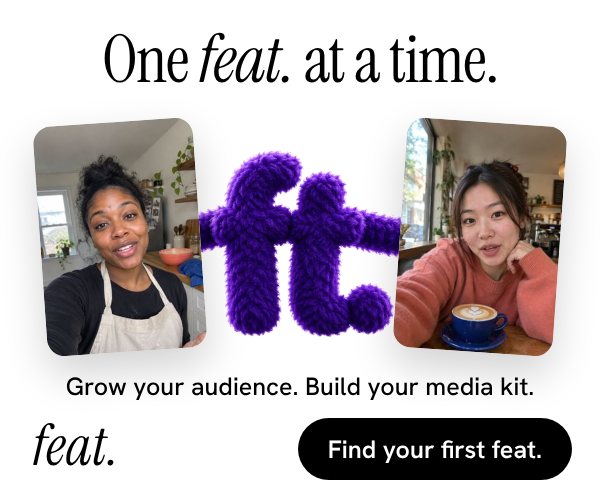
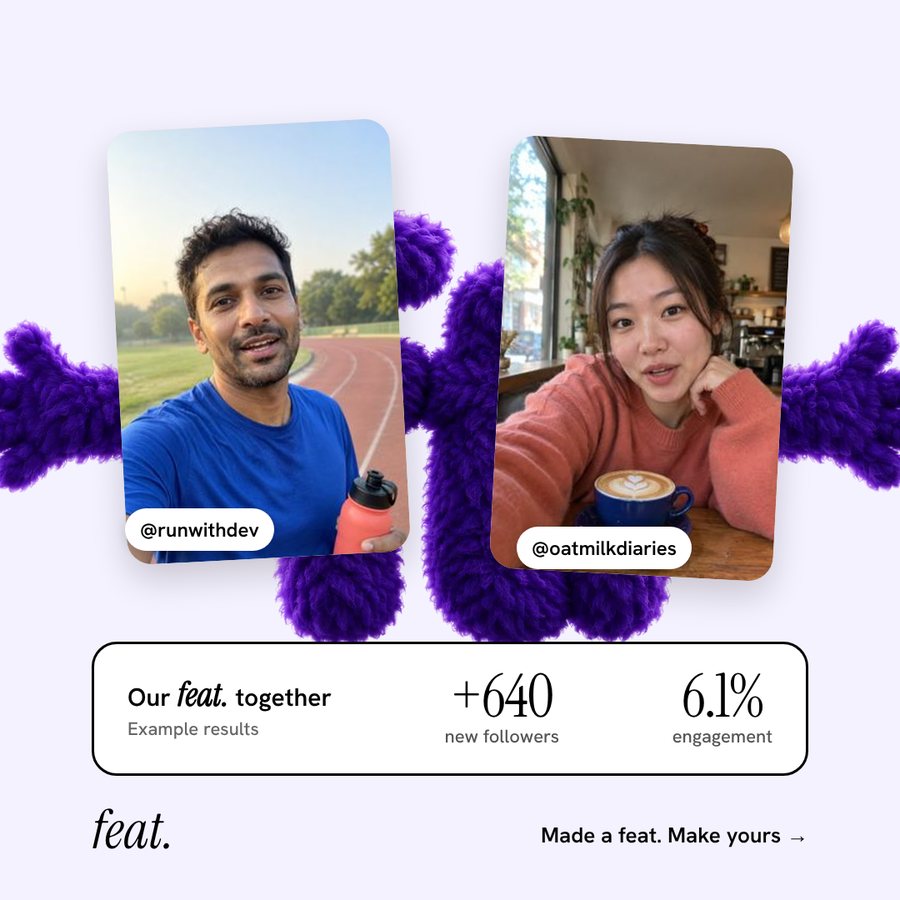
Example creators and results, shown for concept review. Live ads would use real creators under contract with the paid-partnership label.
$3,000, built to learn.
This is the campaign feat. would run first, once a working version and a cohort of alpha creators exist. Most of the budget goes to one TikTok ad group that can actually learn.
| Channel | What runs | 8 weeks | Forecast sign-ups |
|---|---|---|---|
| TikTok | Creator Spark Ads, one ad group | $1,792 | 224–358 |
| Partnership ads plus retargeting from week 4 | $791 | 80–132 | |
| Google Search | Brand and top-10 collab keywords | $280 | 7–13 |
| Reserve | Moved to the best channel mid-flight | $137 |
Forecast, not results. With the founding pilot and referrals, the estimate is 421–803 sign-ups against a goal of 500.
What launching would take.
Idea to test-ready
- Research and audience
- Strategy and media plan
- Brief, name and brand
- Creator-led creative
- Launch kit
Prove it with real creators
- Recruit founding creator pairs
- Interviews and feedback
- Refine the offer
- Creative from real matches
Build and clear it
- Engineering the app and matching
- Platform API approval
- Trademark, privacy and consent terms
- Security and support
Let’s
talk.
I’d love to hear what you’re building. LinkedIn is the best way to reach me.
Message me on LinkedInSee the AI marketing team →My client work is confidential, so I created feat. to show how I think and work, start to finish.